Published Book
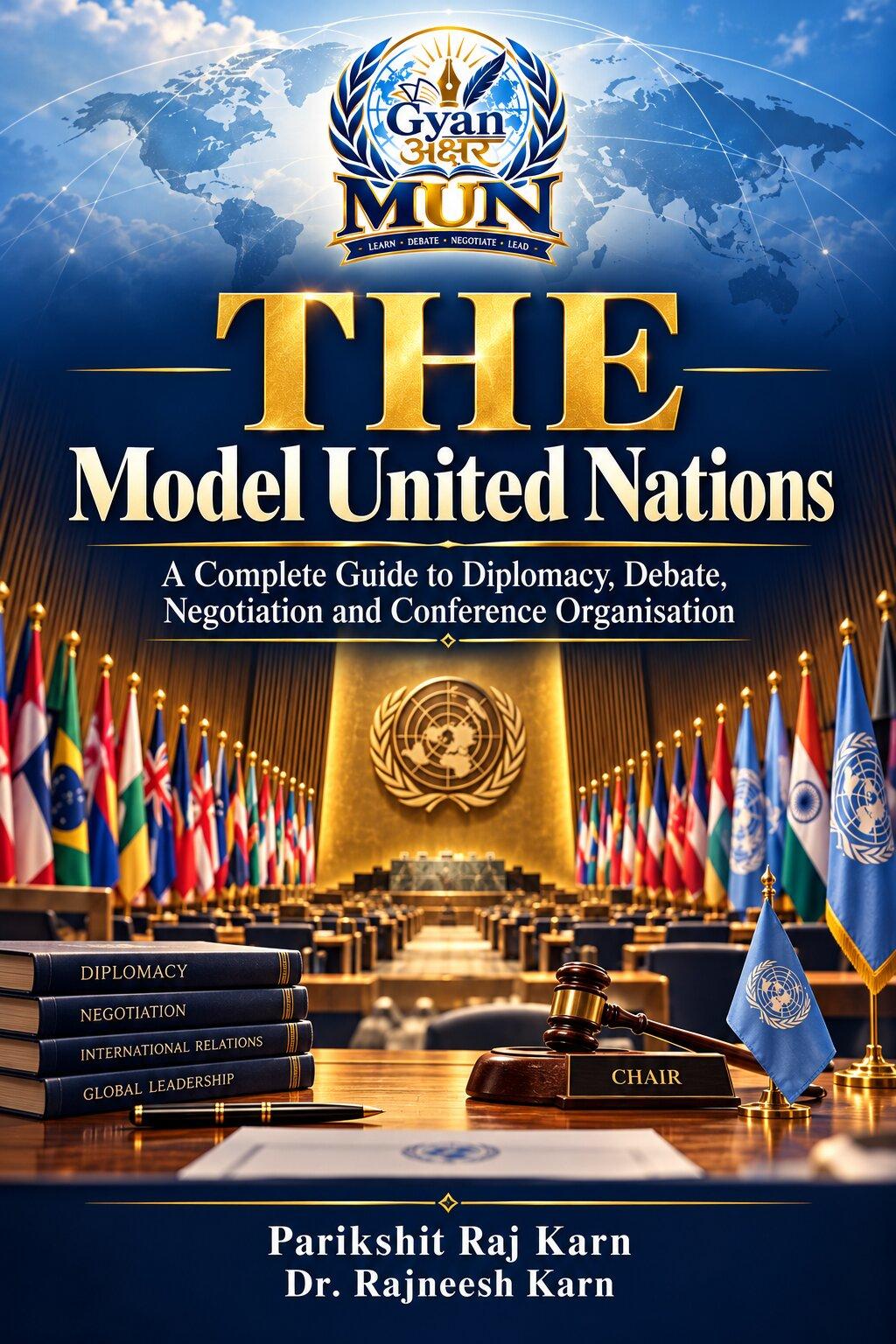
The Model United Nations
- ISBN-13
- 9788117624012
- Language
- English
- Subject
- Self Help
- Pages
- 184
- Price
- ₹299
- Published
- 14 October 2026
by Parikshit
In an increasingly interconnected world, understanding international relations, diplomacy and global cooperation has become more important than ever. Nations today face complex challenges, including geopolitical tensions, climate change, economic inequality, technological disruption, public health emergencies and threats to international peace and security. Addressing these challenges requires dialogue, mutual understanding, informed decision-making and cooperation across national boundaries. The United Nations provides an important platform for such cooperation, while Model United Nations (MUN) offers students an opportunity to experience its principles and processes in an educational setting. The Model United Nations: A Complete Guide to Diplomacy, Debate, Negotiation and Conference Organisation has been written to introduce readers to the world of MUN and provide practical guidance for participating in and organising MUN conferences. The book aims to bridge the gap between understanding the United Nations theoretically and applying diplomatic principles through research, debate, negotiation and collaborative problem-solving. Model United Nations is much more than a public-speaking competition. It encourages participants to examine international issues from different perspectives, understand the policies and interests of countries, evaluate evidence, negotiate compromises and develop practical solutions. Through this process, students can strengthen critical thinking, communication, leadership, teamwork and decision-making skills. They also learn an important lesson: meaningful progress often depends not on winning an argument, but on understanding differences and finding common ground. This book begins with the origins, purpose, structure and functioning of the United Nations before introducing the concept, objectives and educational value of MUN. It explores different committees, their mandates and areas of discussion, helping readers understand how international issues are examined within simulated diplomatic forums. It then guides delegates through country selection, research, position papers, opening speeches, rules of procedure, negotiation, bloc formation, working papers, draft resolutions and amendments. Recognising that a successful conference requires more than capable delegates, the book also examines the organisational dimensions of MUN. It discusses conference governance, planning, budgeting, sponsorships, partnerships, academic quality, ethical conduct, inclusion, safeguarding, awards, evaluation and certification. Further chapters consider emerging formats, technological developments and the future of MUN. The proposed GA-MUN 2027 framework provides a practical case study of how academic planning and event management can be brought together in developing a conference. The book is intended for a broad audience, including school students, university students, first-time delegates, experienced participants, committee chairs, faculty advisers, teachers and aspiring MUN organisers. Readers new to the subject can use it as a starting point, while experienced participants may find it useful as a reference for refining their preparation and understanding conference procedures. Although the book explains established principles and common practices, MUN conferences differ in their rules, committee structures, evaluation systems and award categories. Readers should therefore consult the official handbook and instructions of the conference in which they participate. The examples and suggested frameworks presented here are intended to support learning and adaptation rather than replace conference-specific requirements. Ultimately, the purpose of this book extends beyond helping readers perform well in a simulation. It seeks to encourage informed global citizenship, respect for diverse viewpoints, responsible leadership and a commitment to peaceful cooperation. The ability to listen carefully, question assumptions, communicate respectfully and work towards practical solutions is valuable not only in MUN, but also in education, professional life and society. I hope this book inspires readers to approach every discussion with curiosity, every disagreement with respect and every challenge with a willingness to collaborate. May it help aspiring delegates become confident communicators, thoughtful negotiators and responsible leaders who understand that the future of our interconnected world depends, in part, on our ability to work together. Learn to think critically. Debate with purpose. Negotiate with integrity. Lead with responsibility.
About the author
Parikshit
Student
Enquiries about this title
For bulk orders, review copies or rights, write to the Foundation with the title and its ISBN.